


Written By Alecsa Stewart
Scientifically Reviewed by Daniel Chantigian
Women that are pregnant experience many changes in their body. This includes significant changes in hormone levels and an increase in fluid volume of up to 50%. This can cause fluid retention, swelling (pregnancy edema) and discomfort. Luckily, wearing compression socks can help manage these symptoms, along with other activities as suggested by your doctor. But what happens postpartum?
After you give birth, circulation doesn’t just instantly return to “normal,” and, on top of that, your body is recovering from serious strain. The blood vessels have had to adapt to the increased demands of carrying another being, while cardiac output increases throughout pregnancy. Labor is a culmination of these changes. After giving birth, supporting the circulatory system is key to avoid more complications during recovery.
Wearing compression socks during postpartum recovery is a simple, effective, and stylish way to help with these concerns. They boost circulation, keep swelling down, and offer support for the joints and muscles as you return to physical activity. In this article, we’ll help you understand how long to wear compression socks postpartum, how to choose the right pair of compression socks, and how to make them deliver the most benefits.
How Long to Wear Compression Socks Postpartum
Compression socks are recommended in the postpartum period, primarily to reduce the risk of a venous thromboembolism (creation of blood clots). Studies support that graduated compression will improve circulation by increasing blood flow and helping the veins send blood back to the heart, which is known to reduce swelling and the risk of blood clots.
You can start wearing compression socks right after giving birth, whether you’ve had a vaginal or C-section delivery. In both cases, the mother is likely to have a period of inactivity, often lying down, which contributes to fluid buildup and sluggish circulation (in addition to the pregnancy changes we mentioned above). If you are bed-ridden for a longer period, graduated compression socks will be beneficial throughout that. As always, be sure to consult your doctor to make sure compression socks are safe for you postpartum.
Medical guidelines suggest wearing compression socks:
- After a vaginal delivery: once you notice swelling in your lower legs, up to six weeks postpartum.
- After a C-section: ideally right away in hospital, and up to six months depending on how active you are (some women will see the postpartum edema diminish quickly once they start moving more). Compression socks are often recommended after surgery to prevent blood clots.
Once you notice that your legs no longer feel swollen and heavy, you can reduce the use of compression socks gradually. Cues that you’re “back to normal” include shoes fitting easily, the decreased circumference of your ankles, and a general feeling of lightness.
However, if swelling and discomfort persist beyond the first six weeks and you are being active, eating healthy food, staying hydrated, and generally feeling alright otherwise, you should consult with a physician to determine if there are other causes for your ongoing edema or if you have any concerns about your symptoms.

Guide to medical compression stockings during pregnancy and postpartum
Should You Wear Compression Socks Postpartum?
Wearing compression socks during the postpartum period may provide benefits to your circulatory system and overall comfort through improved blood circulation, which reduces the risk of blood clots or deep vein thrombosis; reduced swelling and discomfort; a soothing massage for your lower legs; gentle support and stability when you go back to walking or exercising. Graduated compression socks are tighter at the ankle and gradually release pressure up the leg, stimulating upwards blood flow and easing the heavy feelings that make your legs tired and sore. After pregnancy and labor, it is during postpartum recovery that you should not stop looking after your circulatory system - and it’s easy to do so with comfortable, versatile compression socks.
Who Needs Them Most
While most new mothers can benefit from compression, wearing the socks can be extra helpful if you have specific recovery needs or lifestyles:
- C-section recovery: Recovering from a Caesarean delivery often requires longer bed rest. It can also mean added swelling from IV fluids administered during the surgery. Additionally, the body produces more fluid to help repair tissues. It can all lead to swollen lower limbs - and compression socks massage the lower legs and improve fluid movement, reduce swelling or edema, and lower the risk of blood clots.
- Nursing for long hours: If your baby has you sitting upright for long periods of time feeding, this can lead to gravity pushing down on your lower legs and making blood and fluid pool around the ankles. By wearing compression socks, you’re encouraging fluid movement upwards and fighting against this.
- On your feet all day: The opposite of being bedridden, many young mothers find themselves on their feet a lot as soon as they return home after delivery. Standing at changing tables, walking around, running errands… it all adds up, while your body is recovering from a hugely impactful effort. To fight gravity and energize the legs, all while preventing blood clots and swelling, compression socks are a simple addition to your outfit that will work in your favor all day long.

How They Help with Edema Relief
During pregnancy, the body holds on to extra fluid and the volume of blood increases to support growing a new life. As a result, as many as 8 out of 10 pregnant women suffer from swelling known as pregnancy edema. After giving birth, there is no “magic” way to flush out this fluid, and even more fluid is produced by tissues as your body is repairing. Combined with potentially being bedridden (especially after a C-section delivery), this can lead to more swelling and discomfort known as postpartum edema.
Graduated compression may help resolve this by applying therapeutic pressure, tighter at the ankle and gradually releasing upwards. This stimulates upwards blood flow, improves lymphatic drainage, and helps reduce the risk of pooling at the ankles. The result: lighter, more comfortable feeling legs and a lower likelihood of complications such as blood clots.
Why Postpartum Circulation Support Is So Important
The early postpartum recovery period is high-risk for circulatory problems, because the body undergoes huge hormonal changes and increases in fluid volume while also being immobile for a longer period of time.
But that’s not all. The risk of a thrombotic event (e.g. stroke or venous thromboembolism) is elevated for up to 12 weeks after pregnancy and was found to be at its highest 6 weeks after delivery. Poor blood flow, combined with lack of movement, can increase the danger of deep vein thrombosis, too. Wearing compression socks or leggings regularly is a low-effort, high-impact way of staying safe by keeping blood moving toward the heart while your circulatory system finds its balance again.
Choosing Compression Socks for Postpartum Edema and Comfort
Selecting the best pair of compression socks for postpartum use is crucial – you are more likely to wear the ones that are comfortable. Consistent use is what will maximize your benefits. The goal here is to balance comfort with support, bearing in mind that postpartum skin can feel sensitive, so you are also looking for breathability and socks that are easy to put on and remove.
Best Compression Levels for Postpartum Use
Compression levels are typically measured in mmHg and categorized as mild (below 15 mmHg), moderate (15-20 mmHg), firm (20-30 mmHg), and medical grade (above 30 mmHg).
Moderate compression socks are ideal for postpartum recovery because they provide enough pressure to be therapeutically effective, without feeling too tight (especially if you have not worn compression socks before, they are a good entry point).
If you have some circulatory concerns, a history of varicose veins or blood clots, or are immobile for longer (e.g., after a C-section birth), you are more likely to benefit from firm compression (20-30 mmHg). You should consult with your doctor, in any case. And don’t forget to ask if you could be eligible for prescription-based, medical-grade socks if you are really struggling with postpartum edema.
Fabric Matters: What Feels Best on Swollen Legs and Feet
The material of your compression socks will significantly affect comfort levels. It needs to be adapted to your activity levels and the ambient temperature and humidity levels:
- Nylon blends are great because they are thin and breathable. Moreover, our moisture-wicking nylon socks are especially designed to move with your body, while keeping feet dry when you exercise or travel.
- Cotton is great for everyday wear and for recovery after a long day on your feet. It is soft, durable, and versatile, but less effective for moisture wicking, so don’t wear it if you’re in a very humid climate
- Merino wool is the best choice for temperature control: if your feet get cold, merino fibers will keep you warm, while drying quickly and ensuring soft comfort; in humid conditions, merino wicks away moisture and keeps feet cool and dry.
Features That Help (Wide Calf, Open Toe, All-Day Wear)
Accommodating the physical changes of a postpartum body requires specific design features that go beyond standard hosiery. At Vim & Vigr, we understand the number of requirements that can come up, so we’re offering a wide choice:
-
Wide calf options to avoid having to wrangle standard-sized compression socks over swollen calves. This design ensures a proper fit, preventing the fabric from digging into your skin. Just measure the circumference of your calves and check the sizing chart available for every one of our socks
-
Open toe compression socks let your toes breathe and allow you to wear sandals or flip flops while still feeling the benefits of graduated compression
-
Seamless designs from our nylon collection are essential for preventing chafing, blistering, or irritation
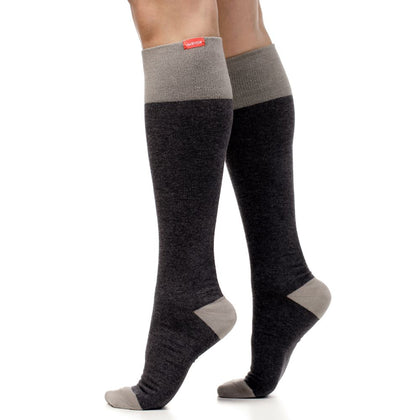
For most mothers, knee-high compression socks are the most versatile choice: you can wear them with jeans, shorts, skirts, or dresses. They bring a pop of color to your outfit, or you can opt for darker colors if needed. They are highly effective for calf and ankle swelling, easy to bring with you when you travel, and versatile for anything from recovery to exercising.
How to Make Compression Socks Part of Your Daily Postpartum Routine
Including compression wear in your wardrobe as a new mother lets you manage postpartum recovery in a practical, no-fuss, but effective way. Consistency is key: wear your socks regularly and you will get the most benefits.
When to Wear Them During the Day (And Why Mornings Matter)
Put your compression socks first thing in the morning. Swelling is usually at its lowest when you wake up, which will make the socks easier to put on, and may be more effective at preventing fluid from building up throughout the day.
Wearing your socks for several hours at a time, ideally throughout the time you’ll be running errands or working, is the best way to go. If you’re new to compression, start with 2 to 3 hours at a time and remove the socks when they get uncomfortable. Then you can gradually increase the length of time you wear them. The same goes for if you’re bedridden or immobile.
Ideally, remove your socks at bedtime to let your skin breathe and avoid irritation. You can definitely safely sleep in compression socks, but consult with your doctor to see if this is needed (or what routine to adopt).
Pairing Compression with Rest, Movement, and Hydration
Compression socks are a highly effective tool against postpartum edema and complications. But they are one of several - so use them as part of a balanced approach that also includes:
-
Elevation: Putting your feet up for 20 minutes at a time when you rest can drain excess fluid from the lower legs and help blood travel towards the heart
-
Gentle movement: Once you’re cleared by your doctor, start exercising gradually to get movement back into the body. It will be great for your circulation, but also for your mental wellbeing. Light walking is a great start
-
Careful hydration: Drink plenty of water to help flush out the extra fluid and keep blood flowing naturally.
Combining all these approaches will help the body rebalance its fluids and reduce the discomfort of postpartum swelling.
Wrapping It Up: Smart Compression for a Smoother Postpartum Recovery
How long you wear compression socks postpartum depends on several factors, from your medical history to the type of delivery you have had, to how your body reacts after the pregnancy and birth.
Whether it is recommended that you wear them for 6 weeks or up to 6 months, graduated compression socks will help reduce swelling by stimulating blood flow and drainage of excess fluid. They are also comfortable, soothing, and supportive when you start walking and standing again.
Most importantly, compression socks form part of a balanced approach to postpartum recovery, which should always include a balanced diet, hydration, gentle movement, and elevating the legs. Always consult with your doctor if you have any doubts or questions.
And remember, stylish, versatile compression is a simple tool you can use anytime, anywhere, and which you’re more likely to wear and reap the benefits of.

References
Davison J. M. (1997). Edema in pregnancy. Kidney international. Supplement, 59, S90–S96. Read it here.
Jamieson, R., Calderwood, C. J., & Greer, I. A. (2007). The effect of graduated compression stockings on blood velocity in the deep venous system of the lower limb in the postnatal period. BJOG: an International Journal of Obstetrics and Gynaecology, 114(10), 1292–1294. Read it here.
Morinaga, K., Nakahara, M., Matsuura, K., Ishihara, S., Idobata, Y., Kobata, T., & Tsuji, T. (2025). Assessing the acute effect of compression socks on improving arterial compliance in young volunteers. Heliyon, 11(2), e41704. Read it here.
Phillips, S. M., Gallagher, M., & Buchan, H. (2008). Use graduated compression stockings postoperatively to prevent deep vein thrombosis. BMJ (Clinical Research Edition), 336(7650), 943–944. Read it here.
Saliba-Júnior, O. A., Rollo, H. A., Saliba, O., & Sobreira, M. L. (2022). Positive perception and efficacy of compression stockings for prevention of lower limb edema in pregnant women. Jornal Vascular Brasileiro, 21, e20210101. Read it here.
Sanghavi, M., & Rutherford, J. D. (2014). Cardiovascular physiology of pregnancy. Circulation, 130(12), 1003–1008. Read it here.
Soma-Pillay, P., Nelson-Piercy, C., Tolppanen, H., & Mebazaa, A. (2016). Physiological changes in pregnancy. Cardiovascular Journal of Africa, 27(2), 89–94. Read it here.