


Written By Alecsa Stewart
Scientifically Reviewed by Daniel Chantigian
Water retention is a common symptom of premenstrual syndrome (PMS) - the umbrella term for what women experience in the days or week before their period. It is often called period bloating, and it can lead to swollen feet and ankles, discomfort, gas, and feeling sluggish.
Thanks to effective lifestyle changes, including wearing compression socks that help improve circulation and prevent fluid from building up in the limbs, you can manage and/or reduce water retention symptoms before your period.
In this article, we will give you 7 tips to fight period bloating and explain why this happens, and when to see a doctor about it.
7 Tips to Get Rid of Water Retention Before Your Period
Premenstrual water retention has been linked to hormone level fluctuations, diet, lifestyle, and personal conditions. To help keep your ankles light and bring down bloating, you can resort to easy, at-home remedies - and some stylish ones, too!
1. Wear Compression Socks
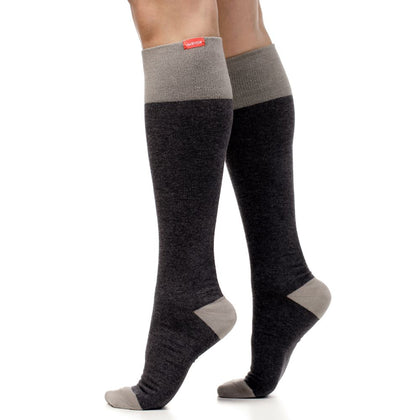
You may not think about compression socks as a PMS relief tool, but they are a secret weapon combining effectiveness and style. Through the therapeutic pressure they apply to the lower limbs, knee-high compression socks stimulate blood flow. Medical studies found compression to be effective at relieving swelling. Wear graduated compression designs (tighter at the ankles and loosen moving upwards) to ensure circulation out of the legs, which scientific research has found to reduce blood and fluid pooling at the ankles.
Improved circulation removes inflammatory proteins and excess fluid from the affected areas. You will also benefit from more efficient delivery of oxygenated blood to the lower leg muscles, which energizes them and makes them feel less “heavy.” Athletes playing professional sports often wear compression socks to improve recovery or even to improve performance, for this very reason. Whether you’re working out and dealing with PMS, or simply sitting at your desk and feeling your legs and feet swelling.
Graduated compression socks also support the muscles and joints, giving you more stability and taking the pressure off the lower limbs. This is great for walking (another way to relieve period swelling), but also for any physical activity you may have planned when you are not feeling your best. For more coverage, including your thighs and pelvic area, you can also wear compression leggings to support the muscles and stimulate blood flow throughout the legs.
Finally, a key benefit of wearing compression socks or stockings during your period is the style bonus points. No one will know the difference between these and a pair of regular socks, but you’ll definitely be noticed for the quirky designs and the pop of color. Or you can be completely discreet with classic black compression leggings, all while getting the benefit of boosted circulation throughout your legs and the pelvic area. In fact, we would recommend our 15-20 mmHg compression tights to help relieve any aches and pains and even manage bloating.
2. Reduce Your Salt Intake
A simple yet effective measure you can take with your diet is to reduce salt intake during the premenstrual period, which is recommended by the Mayo Clinic. Too much sodium can increase water retention. This will make you feel bloated, and it can affect blood circulation. Avoid eating heavily processed foods and focus instead on whole foods rich in nutrients.
3. Get Your Body Moving
Movement is key to keeping a healthy blood flow and to preventing fluid accumulation, especially during the premenstrual phase. A scientific report from 2024 found that aerobic activities (like running), yoga, and weight training may all reduce PMS symptoms, but listen to your body in case it feels too hard. Even a few brisk walks (20-30 minutes) will help get the blood flowing through the legs and body, while clearing your mind and improving your mood.
For further relief from heavy, swollen feet and lower legs, lift them up for a few minutes at the end of the day (or multiple times throughout the day if you can). Finally, consider doing some low-impact exercise like yoga or swimming (even aqua jogging) to improve circulation without putting too much additional stress on the body.
4. Eat Foods Rich in Potassium
Potassium-rich foods help counteract the effects of sodium on bloating and swelling. By helping process and eliminate sodium, as well as relaxing the walls of blood vessels, potassium can be a key aid in fighting period swelling. This report states that potassium intake may reduce the problematic effects of sodium on blood pressure.
Some foods to add to your diet include avocados, bananas, and tomatoes. Make smoothies and healthy salads or simply eat a banana for a midday snack.

5. Limit Alcohol
Alcohol can contribute to swelling and cause gastrointestinal distress. It is a known cause of inflammation and dysregulation in normal body processes. This can worsen the symptoms you are already struggling with due to period water retention. Try to reduce your intake or avoid alcohol in the days before menstruation.
6. Manage Stress Levels
Studies as far back as 1983 pointed to the link between stress, high cortisol levels, and fluid retention. If you are under chronic stress, the body produces more of the hormone cortisol (also known as the “stress hormone”). An excessive amount of cortisol can increase sodium retention, which causes an increase in water retention. These factors combine to increase your risk of premenstrual water retention and discomfort.
So, do you want to know how to manage stress levels? It is easier said than done! Here are a few tips to manage stress to reduce water retention:
- Ensure you get 7 to 8 hours of sleep, going to bed and waking up at consistent times throughout the week. Go to bed slightly earlier during the luteal / premenstrual phase of your cycle, to give yourself time to unwind and prepare for a restful night.
- Stay hydrated and eat nutritious, whole foods. It is good for your digestion, but it will also improve your mood.
- Do something that you are excited or enthusiastic about! Book a pampering session at your favorite salon, go out with friends, watch a movie, or simply relax at home, immersed in a creative hobby. It will take your mind off other sources of stress and improve your mental wellbeing.
- Stay active. Walk or do some form of exercise (whatever you prefer!) to release endorphins and improve your mood. Bonus points if you can do it outdoors - some fresh air might help you feel better.
- Create a wind down evening routine. Instead of watching TV until late and hopping straight into bed, why not carve out time to do something just for you? Follow a wind-down yoga session (10-15 minutes), a guided meditation, or do your own thing. Some people enjoy preparing their clothes and laying out what they will need to take with them the next morning (if you need to pack for work). Then, spend time meditating and reflecting on the day, before putting the lights out.
7. Stay Hydrated
Hydration helps with water retention because it facilitates the transit of water through your system. Drinking water helps keep your kidneys working well to expel excess fluid and sodium from the body.
While hydration needs can vary depending on the environment and medical conditions, the US National Academies of Sciences, Engineering, and Medicine suggested 2.7 liters a day (11.5 cups) is the adequate amount for women. But bear in mind, this includes fluid coming from your food (about 15-20% of your fluids often come from food).
What Causes Water Retention Before Your Period?
Traditionally, scientists believe that changes in hormone levels are behind pre-period water retention. However, some studies indicate a peak in reported bloating on the first day of menstruation, such as a 2011 report. Progesterone and estrogen hormones are known to influence fluid regulation, so fluctuations may be causing water retention.
Your diet could also lead to water retention. Eating salty foods is known to facilitate this and should be avoided as much as you can. Moreover, period bloating and stomach cramps (classic elements of PMS) can be caused by low levels of potassium.
Potassium is known to help maintain blood volume and fluid balance, among its other benefits. This mineral reduces the impact of sodium, helping the body process it and reducing the associated swelling and bloating. It also helps relax the walls of your blood vessels, lowering blood pressure and facilitating circulation. Low potassium levels, subsequently, can lead to bloating and period swelling.

How Long Does Premenstrual Water Retention Last?
Period bloating, particularly PMS-linked water retention, is highly personal and can be influenced by your overall health conditions and lifestyle. However, it is normally experienced a week before your period (but can be less time). Many women report that the swelling goes down starting on the first day of menstruation.
When to Talk to Your Doctor About PMS-Related Water Retention
Water retention and period bloating are normal, but if it becomes problematic, you should consult a medical professional. Start by keeping track of your symptoms every month to see what patterns emerge, then have a conversation about what concerns you.
If your water retention gets progressively worse, or you are concerned that the swelling is caused by some other underlying condition, consult with your doctor immediately.
While PMS symptoms like water retention, leading to bloating and swelling, can be uncomfortable, there are ways to reduce their impact on your everyday life. One of the easiest and most effective ways to bring down swelling and inflammation in your lower limbs is to wear compression socks, which also add style and are comfortable and soothing. During your period, you may also benefit from the support and gentle massage of full-length compression tights. Added to a few lifestyle changes, you should be able to manage and reduce the symptoms of water retention, feeling better at any point in the month.
References
Ayyub, S., Agrawal, M., Sharma, V., & Aravind, A. (2024). The Effect of Physical Activity on Premenstrual Syndrome: A Systematic Review. Annals of neurosciences, 09727531241297012. Advance online publication. Read it here.
Charles, T., Mackintosh, D., Healy, B., Perrin, K., Weatherall, M., & Beasley, R. (2011). Merino wool graduated compression stocking increases lower limb venous blood flow: a randomized controlled trial. Advances in therapy, 28(3), 227–237. Read it here.
Kelley, K. W., & Dantzer, R. (2011). Alcoholism and inflammation: neuroimmunology of behavioral and mood disorders. Brain, behavior, and immunity, 25 Suppl 1(0 1), S13–S20. Read it here.
Levings, J. L., & Gunn, J. P. (2014). The imbalance of sodium and potassium intake: implications for dietetic practice. Journal of the Academy of Nutrition and Dietetics, 114(6), 838–841. Read it here.
Light, K. C., Koepke, J. P., Obrist, P. A., & Willis, P. W., 4th (1983). Psychological stress induces sodium and fluid retention in men at high risk for hypertension. Science (New York, N.Y.), 220(4595), 429–431. Read it here.
Mayo Clinic Staff. Water retention: Relieve this premenstrual symptom. Mayo Clinic: Healthy Lifestyle – Women’s Health. Read it here.
Mosti, G., Picerni, P., & Partsch, H. (2012). Compression stockings with moderate pressure are able to reduce chronic leg oedema. Phlebology, 27(6), 289–296. Read it here.
Partsch, H., Winiger, J., & Lun, B. (2004). Compression stockings reduce occupational leg swelling. Dermatologic surgery: official publication for American Society for Dermatologic Surgery [et al.], 30(5), 737–743. Read it here.
White, C. P., Hitchcock, C. L., Vigna, Y. M., & Prior, J. C. (2011). Fluid Retention over the Menstrual Cycle: 1-Year Data from the Prospective Ovulation Cohort. Obstetrics and gynecology international, 2011, 138451. Read it here.