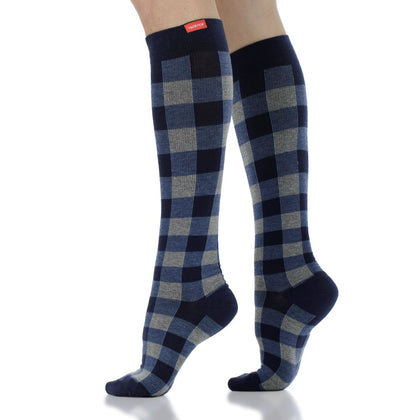


Compression socks are effective for boosting circulation, preventing swelling and discomfort due to insufficient blood flow, and avoiding or alleviating medical conditions like varicose veins. But varicose veins don’t only occur in the lower legs, so you may be wondering what options there are for higher up and how to make the best choice.
One thing is certain: varicose veins are the result of weak valves in leg blood vessels that causes problems with transporting blood out of the legs (according to the Mayo Clinic). To relieve any discomfort, your goal should be to improve circulation in the limbs, pushing blood upwards to help reduce pain and discomfort. Thanks to high-quality thigh-high and full-leg compression stockings, this can be made easy and stylish, too!
Our guide to thigh-high compression stockings will cover the benefits of compression stockings for varicose veins and related symptoms, what to look for when you’re shopping, how to use your pair, and what you can do if thigh-highs are not for you. By the end, you’ll be able to choose the most adequate option to fight the symptoms of varicose veins or their onset.
Why Thigh-High Compression Stockings for Varicose Veins?
Varicose veins occur when the blood doesn’t travel back to the heart, sitting in the lower limbs and putting pressure on the veins. This may cause damage that, over time, develops into the unsightly look we associate with this condition. But there’s more: when you suffer from varicose veins, you can experience pain, discomfort, heavy legs and feet, and even cramps.
Graduated compression socks and tights are designed to boost upwards circulation. Because they are tighter at the ankles and slowly release pressure as they climb up the legs, they are very effective in improving lower limb blood flow and avoiding blood pooling. Vim & Vigr knee-high socks and full-length compression tights both use this design, so that legs feel lighter and there may be a lower risk of developing varicose veins in the first place.
Unlike knee-high socks, thigh-high or full-leg compression clothing delivers the benefits of compression up to the thighs and groin, following the great saphenous vein (the body’s longest superficial vein). When varicose veins or venous insufficiency affects the upper leg, or when there's reflux in the saphenofemoral junction (where the great saphenous vein meets the deep venous system in the groin), thigh-high stockings become medically necessary to address the full extent of the venous problem and prevent blood from pooling in the thigh area. Compression legwear is often recommended as the first line of defense in managing varicose veins.
When Thigh-Highs Make Sense Over Knee-Highs
In certain medical scenarios, your doctor will recommend using thigh-high compression stockings to improve upper leg circulation. Here are some of the most likely:
- Varicosities located above the knee. If you have varicose veins or spider veins above the knee, it is recommended to use graduated compression that covers this area to manage symptoms, reduce swelling, and improve quality of life. Individualized assessments are key, but wearing full-length Vim & Vigr compression tights, for example, will cover the full leg and groin area, boosting blood flow and supporting the entire lower body (rather than just up to the knee).
- Deep vein thrombosis (DVT) affecting thigh veins. Patients with DVT benefit from thigh-high compression to address damage to the upper leg veins and prevent post-thrombotic syndrome in the thigh area.
- DVT prophylaxis in stroke patients. A study comparing thigh-high and below-knee stockings found that those wearing thigh-high compression had a lower risk of developing proximal DVT after a stroke.
- Venous insufficiency. If you suffer from severe or advanced venous insufficiency affecting the entire leg, full-limb compression will not only improve blood flow but also help relieve pressure on the veins higher up the leg.
From a lifestyle perspective, thigh-high compression stockings make sense if you are at risk of developing varicose veins throughout the leg:
- For sitting or standing occupations, the risk is not just with the below-knee blood flow. Office workers, for example, can experience upper-leg blood pooling, while hairdressers or nurses can struggle with the downward pressure of gravity from standing for long periods of time. Thigh-highs provide support for the entire venous system during gravitational stress from prolonged standing.
- Upper leg swelling during pregnancy. The increased volume of blood flowing through the body during pregnancy can place massive pressure on the upper legs, not just the lower limbs. Thigh-high compression also provides support and swelling relief higher up the leg.
- Recovering after surgery. If you are immobilized as you recover from surgery, or if you’ve had interventions like sclerotherapy, the thigh veins can be affected. Doctors will prescribe full-leg compression to help prevent varicose veins, blood clots, and potentially reduce recovery times.
Key Benefits for Upper-Leg Support
When you choose thigh-high or full-leg compression stockings over knee-high models, the key difference is the support you receive on the upper leg. This yields a few important benefits:
- Reducing blood pooling in the thigh: without compression or sufficient activity, blood can pool in the thigh veins, putting pressure on the vessels and leading to vein damage. The calf muscle is important in helping pump blood out of the veins, and people with varicose veins or chronic venous disease struggle to pump blood out effectively. Graduated pressure where the gradient pushes blood up toward the heart, like in Vim & Vigr compression tights, prevents blood from accumulating in any section of the leg.
- Improving venous return from the great saphenous vein system. In the legs, this vein extends from the inner ankle to the groin; wearing thigh-high compression supports the entire pathway and improves valve function, preventing the reflux that creates and worsens varicose veins.
- Reducing swelling and pain in the upper leg: many people with varicose veins report heavy, achy feelings along the entire leg, especially after standing for a long period of time. Thigh-high compression stockings stimulate blood flow and massage the thighs, which can help in prevent congestion and soothe pain.
- Lowering the risk of upper leg edema: through therapeutic pressure, fluid keeps moving and doesn’t pool in the tissues higher up the leg.
- Improving skin condition: just like for the lower legs, compression applied higher up the limbs prevents chronic venous insufficiency affecting the area, which may help reduce the risk of symptoms like skin discoloration or ulcerations.
Common Medical Use Cases & Doctor Recommendations
If you suffer from varicose veins already or have a medical condition that puts you at risk, using thigh-high compression stockings could make a big difference and improve your quality of life. Varicose veins do not only occur in the lower legs - they result from pressure on the blood vessels, which can also happen higher up the leg.
The most common medical use cases for full-leg or thigh-high compression against varicose veins include:
- Chronic venous insufficiency - when vein valves are damaged throughout the leg, particularly in the thighs, doctors typically recommend 20-30 mmHg thigh-high compression stockings.
- Varicose veins caused by pregnancy - blood volume increases and hormonal changes put pressure on the leg veins; additionally, the growing uterus weight adds to the pressure on pelvic veins. Using full-length tights or stockings to apply graduated compression can provide important relief.
- Post thrombotic syndrome - occurs in 23-60% of patients who have had deep vein thrombosis; it can cause pain and swelling, while thigh-high compression stockings can reduce the risk.
- Pre- and post-surgery applications can also be useful for reducing swelling, improving blood flow, avoiding complications, and more.
There are also other specific issues, such as localized fluid accumulation (lymphedema), where thigh-high compression stockings will be useful. The American Venous Forum, European Society for Vascular Surgery, and numerous other organizations support the use of compression therapy to prevent and manage varicose veins. The length of your compression garment is determined by the extent of the condition - thigh-highs are therefore critical when your symptoms extend above the knee.
Please keep in mind that it is crucial to discuss any of these with your doctor, as your circumstances may dictate different or complementary treatments.
What to Look For in the Best Thigh-High Compression Stockings
So, how do you pick the best thigh-high compression stockings for varicose veins? The core elements you need to check are graduated or uniform compression, compression levels, fabric, and fit. Let’s have a look at each.
Graduated Compression (and Why It Matters)
Compression garments are often designed to apply the same level of pressure throughout the length of the item. For example, a pair of regular thigh-high compression stockings support and compress the leg, from ankle to top of the thigh, with the same strength. This feels supportive and stimulates the blood flow but might not effectively stimulate upwards blood flow.
Graduated compression, on the other hand, applies a gradually changing level of pressure from one end of the garment to the other. When we talk about compression stockings, this means they are tighter at the ankle and gradually release pressure as they climb up the leg. Looking at compression therapy after invasive treatment of superficial veins in the legs, a summary of guidelines from the Journal of Vascular Surgery explains:
- Graduated compression reduces the risk of DVT, edema, and superficial phlebitis.
- The physiologic effects of graduated compression include increased blood flow in the deep veins.
- Graduated compression legwear reduce pressure in the veins and decreases superficial varicose veins.
Compression Levels Explained
When choosing your compression stockings, you’ll need to check just how tight they are. Pressure levels for compression garments are measured in mmHg and range from 15-20 mmHg (for casual, everyday wear) to 30-40 mmHg for medical-grade, prescription-only items.
Vim & Vigr footless tights are perfect for everyday wear in 15-20 mmHg compression. They are great if you are looking to prevent varicose veins or dealing with milder cases.
If you need more support or your doctor recommends it, opt for our 20-30 mmHg footed tights.
Comfort Features: Fabric, Breathability, and Fit
Finally, don’t neglect comfort! You’re more likely to wear your compression stockings and feel their benefits if they fit you right while still being comfortable. So, to find the best pair for you, consider:
- Fabric: Many thigh-highs or full-length tights are made from cotton, which is nice and breathable, but cotton doesn’t provide the sleek, flexible level of support required for covering your legs in motion. Vim & Vigr tights are made from high-quality breathable nylon, which also moves seamlessly with your body and doesn’t restrict as it supports.
- Fit: The other key element of compression wear is ensuring they fit well. Your goal shouldn’t be for your tights to be loose, as then you’re not getting the benefit of compression. But if they are too tight, they will feel restrictive and can even harm you. We recommend using our sizing charts, available on each product page, to match your weight and height against our sizes. Luckily, with Vim & Vigr, there are a lot of choices that will meet your needs!
Fit Tips: Getting the Right Size for Your Legs
To ensure therapeutic benefit and optimal comfort levels, always pay attention to how to measure yourself before you buy thigh-high stockings, compression socks, or tights. We’ve also included some tips on how to wear your tights and stockings for best results.
Measuring Your Legs for Thigh-Highs
When you shop for regular knee-high compression socks, it’s always a good idea to measure the circumference of your calf before you match to your shoe size to get the best fit. For tights, however, things are simpler.
All you need to do is weigh yourself. Make a note of your height and weight. Then, match these up in our easy sizing chart, which you’ll find on every product page.
Wide Thighs, Tapered Legs, and Other Fit Challenges
Thigh-high compression stockings are most effective when they sit smoothly against the skin and fit well. If you have specific fit challenges, we have some suggestions on overcoming them:
- “Tapered legs” - this is a common term for when you have wider thighs and smaller calves, which often leads to the stocking fitting well at the ankle but “biting” at the top; alternatively, you can have it fit well on the thigh, but too loose at the ankle
- Overcome this issue by looking for products that offer multiple calf and thigh size options; some lines may also come in “wide thigh” fits
- Wide calves - when you are more athletic or have pronounced calf muscles, you may be tempted to size up, but have a roomy thigh which means the stocking slides down
Prioritize ankle and calf measurements as a guide for your sizing. Alternatively, with our Vim & Vigr compression tights, go for a garment that covers up to the waist and stays in place more securely.
-
Sensitive skin or prone to skin irritation from heat or sweat. This can lead to itching and discomfort, particularly where the thigh band keeps the stocking up
An easy fix is to avoid covering the irritated skin - maybe switch to knee-high compression socks for a while, especially if you don’t have varicose veins at thigh level; to keep covering the thigh, but remove the uncomfortable band issue, go for tights that don’t stop at the thigh and sit smoothly against the upper leg.
Preventing Slipping and Rolling: What to Know
Slipping and rolling are the result of incorrect sizing, issues with the top band, or the fabric not sitting smoothly with your thigh-high compression stockings. Most of these can be fixed easily!
Silicone bands and grip tops
Most thigh-highs are held in place with a silicone dot or lined band. This should feel secure, but not too tight. If the band leaves marks or feels too tight, it’s a sign you should go up a size.
To reduce slipping, always put them on when your skin is completely dry. Avoid lotion or body oil and maybe move your leg moisturizing routine to the evening (when you take off your stockings).
You should also be careful to place the top band high enough that it doesn’t bend or rub, but not so high that it bites into soft tissue.
Finally, keep your thigh-high stockings clean. Use regular detergent and air dry only. Harsh detergents or fabric softeners can damage the silicone grip.
Extra hold options
If the silicone grip isn’t enough and you’re sure you’re wearing the right size, you could try:
-
Stocking adhesive, which is a type of “body glue.” It can work well in hot weather. Use sparingly near the top edge of your stockings.
-
Garter belt or suspender attachments.
-
Full-cover compression tights that move the grip point to the waistband and feel more secure
Real-Life Usability: Wearing and Caring for Thigh-Highs
Thigh-high compression stockings may feel difficult to handle, so we’ve put together some tips to make this easier, as well as our advice on caring for your garments so they last as long as possible.
Tips for Putting Them On and Taking Them Off
Because compression tights fit snugly, they can be a little difficult to put on and take off. Here’s how to avoid discomfort or damaging your stockings:
-
Put them on first thing in the morning, when legs may be less swollen
-
For footless stockings and tights, roll them up in your hand and then put the foot through; start smoothing up the leg in sections
-
Ensure there are no folds or bunching
-
Use rubber donning gloves if you have long nails or are afraid of snagging the fabric
-
Turn the stocking inside-out at the heel (if a footed model) then place the foot in, roll it over, and smooth up the leg in sections
-
Ask for help if you have limited mobility
To take your stockings off, roll them down gradually and don’t pull from the bottom. This reduces stress on the fabric and elastic bands.
Care and Washing to Maintain Compression
It is best to wash your compression socks, tights, and stockings after every use to keep the fabric in good condition. You’ll remove sweat and oils that can affect the elasticity and reduce grip from silicone bands.
Always use cool or lukewarm water to wash your stockings and don’t add bleach or fabric softener. A regular detergent is enough. Then, air dry only.
Daily Wear Considerations (and When to Avoid Use)
Got any other questions on wearing thigh-high compression stockings? Here are some more tips for safe, effective wear:
- Start off slowly and gradually increase the time you wear your compression stockings. If you’re not familiar with the sensation of therapeutic pressure, it may feel uncomfortable to start.
- Most people find it best to wear the stockings during the day and remove at night but check the best approach with your doctor.
- Always smooth out wrinkles and ensure the top band is flat against your skin.
- Stop wearing compression stockings immediately if you feel numb or severe pain or if you notice skin color changes or sores. Seek medical advice.
Stylish Alternatives When Thigh-Highs Aren’t the Right Fit
Thigh-high compression stockings work well to manage and reduce symptoms of varicose veins, but they’re not always the most wearable or comfortable option. They are particularly difficult if you struggle with slipping and rolling, and alternatives exist! Vim & Vigr compression tights and socks offer practical and stylish alternatives that can match your lifestyle or medical requirements and be easier to wear.
Compression Socks for Everyday Use
If your varicose veins are mainly in the lower leg, below the knee, then knee-high socks are a practical, versatile, and stylish choice. Vim & Vigr graduated compression socks support circulation and relieve pressure on the veins, while also being easy to pair with your choice of footwear. You also get a wide range of designs and colors, so it’s stylish compression that you’ll want to wear!
At Vim & Vigr, we also offer a wide range of sizing options, accommodating wide calves and making it easier to benefit from compression when and where you need it. And you can choose fabrics depending on your activity levels and the weather.

Compression Tights for Full-Leg Coverage
Still need that full-leg coverage? For varicose veins in the thighs, Vim & Vigr compression tights are smooth and streamlined, fitting seamlessly under dresses, skirts, or cold-weather layers. You can wear our footless tights as workout gear, too!
All our compression tights are graduated to boost full-leg blood flow. And many people prefer them to thigh-highs as they are anchored at the waist, feeling more secure and eliminating the issues with top-band rolling.
Leg Sleeves for Targeted Support Without Foot Coverage
Finally, compression sleeves are a great alternative when you want calf support but prefer to keep your feet free - either to control the temperature or mix and match with other socks. They can be especially useful if you dislike compression over the toes, need more room in the forefoot, or simply want a more modular setup you can adjust around your footwear and daily routine.

Final Thoughts: Finding the Best Fit for You
The “best” compression option for varicose veins is the one you will wear consistently, because it’s comfortable and looks good, too. If thigh-high stockings fit well, they are highly effective for upper-leg support. But if they don’t, we have plenty of options for you.
From everyday compression socks to sleek tights and versatile sleeves, Vim & Vigr makes it easier to find support that fits your body, your wardrobe, and your life.

References
Ashrani, A. A., & Heit, J. A. (2009). Incidence and cost burden of post-thrombotic syndrome. Journal of thrombosis and thrombolysis, 28(4), 465–476. Read it here.
Cavezzi, A., Mosti, G., Colucci, R., Quinzi, V., Bastiani, L., & Urso, S. U. (2019). Compression with 23 mmHg or 35 mmHg stockings after saphenous catheter foam sclerotherapy and phlebectomy of varicose veins: A randomized controlled study. Phlebology, 34(2), 98–106. Read it here.
Charles, T., Mackintosh, D., Healy, B., Perrin, K., Weatherall, M., & Beasley, R. (2011). Merino wool graduated compression stocking increases lower limb venous blood flow: a randomized controlled trial. Advances in therapy, 28(3), 227–237. Read it here.
CLOTS (Clots in Legs Or sTockings after Stroke) Trial Collaboration (2010). Thigh-length versus below-knee stockings for deep venous thrombosis prophylaxis after stroke: a randomized trial. Annals of internal medicine, 153(9), 553–562. Read it here.
Lurie, F., Lal, B. K., Antignani, P. L., Blebea, J., Bush, R., Caprini, J., Davies, A., Forrestal, M., Jacobowitz, G., Kalodiki, E., Killewich, L., Lohr, J., Ma, H., Mosti, G., Partsch, H., Rooke, T., & Wakefield, T. (2019). Compression therapy after invasive treatment of superficial veins of the lower extremities: Clinical practice guidelines of the American Venous Forum, Society for Vascular Surgery, American College of Phlebology, Society for Vascular Medicine, and International Union of Phlebology. Journal of vascular surgery. Venous and lymphatic disorders, 7(1), 17–28. Read it here.
Mayo Clinic Staff. (2024). Varicose Veins. Mayo Clinic Press. Read it here.
National Clinical Guideline Center (UK). (2013). Chapter 8: Conservative Management. In London: National Institute for Health and Care Excellence (NICE), Varicose Veins in the Legs: The Diagnosis and Management of Varicose Veins. Read it here.
National Institute of Health. (2023). Health Topics: Varicose Veins. Read it here.
Tan, M., Urbanek, T., Rabe, E., Gianesini, S., Parsi, K., Davies, A. H., & UIP (2024). Compression therapy in the management of varicose veins. Phlebology, 39(4), 276–279. Read it here.
Williams, K. J., Ayekoloye, O., Moore, H. M., & Davies, A. H. (2014). The calf muscle pump revisited. Journal of vascular surgery. Venous and lymphatic disorders, 2(3), 329–334. Read it here.