


Written By Alecsa Stewart
Scientifically Reviewed by Daniel Chantigian
When you give birth by C-section, it’s a major abdominal surgery that can trigger a series of possible health concerns. Swelling is a common risk factor, especially in the lower limbs. Of women that have swelling because of pregnancy, over 75% of women have it before AND after giving birth. Swelling is common for women to experience after birth. You’ll be resting in bed and be less active than usual for days and weeks after birth, and you may encounter circulation issues (which may have started during pregnancy).
Wearing compression socks often starts in hospital when you recover from a C-section. To counter the effects of longer bed rest than for a vaginal birth, compression therapy may help your legs by boosting blood flow, reducing swelling and discomfort, and helping support your lower limbs as you go back to physical activity when you’re ready.
But do you need to keep wearing compression socks after a C-section and if so, for how long? The immediate answer is it depends, but there are guidelines and medical advice to help inform your decision. This guide will cover how compression and circulation support in general make a difference after a C-section, how long you may need compression socks for, and how to choose your pair.
Why Circulation Support Matters After a C-Section
A Cesarean delivery entails surgery and should be treated like any major medical intervention in terms of its impact on the body and the circulatory system. To understand why we need to support blood flow following surgery, let's think about the importance of the circulatory system for keeping your body healthy:
- It delivers oxygen and nutrients to the organs, muscles, and tissues.
- It helps remove waste products from the body.
- A healthy circulatory system reduces the chance of developing blood clots.
After a surgery, circulation may slow down for a number of reasons:
- Within the first hours and days after a C-section, you’ll be moving less as your body heals. This means that blood and fluids begin to pool in your legs to increase swelling and difficulty moving fluids out of the legs.
- Pregnancy causes hormonal and circulatory shifts, which continue to influence your body as it heals during the postpartum period. A medical study found that pregnancy increases your blood’s ability to clot. Because of this, you are 5 times more likely to develop deep vein thrombosis that can lead to major health problems.
Swelling in the legs, ankles, and feet is very common after giving birth in general. After a C-section, the added fluid in the body and the longer time without movement increases both the likelihood of swelling and the length of time you may experience it. As you sit, lie down, and rest, fluid is mostly likely to pool in the lower limbs.
As a result, there is an increased risk of circulatory complications. They can include blood clots, varicose veins, or deep vein thrombosis. To avoid these, while not putting too much pressure on new mothers to move around, the use of compression to improve blood flow is very popular on maternity wards. For example, the Society for Maternal-Fetal Medicine recommends the use of compression after a C-section.
Wearing compression socks is a simple tool that can be used right after giving birth, during the immediate postpartum period, and for however long your doctor recommends them. Discover more benefits of wearing compression socks even after you recover by reading this blog.
Do You Need Compression Socks After a C-Section?
While not everyone needs extra circulation support, compression socks are particularly helpful as a soothing, preventative tool after a C-section, even if your blood flow is not affected. However, you should know a scientific review has found that the risk of venous thromboembolism is 4 times higher for women who have undergone a C-section, compared to those who have had a vaginal delivery. It does pay to lower these as much as possible and to use compression as a wellbeing aide when you can.
Typical scenarios where compression socks are recommended
- Immediately after surgery, as you mostly rest in bed - often, these are provided by the hospital.
- During your stay in the hospital.
- If you have limited mobility, during the first 6 weeks after your C-section is commonly recommended timeframe.
- Later on, if you continue to sit for long periods of time or have to stand for long stretches (e.g., at work).
When compression socks are optional after a C-section
Of course, not everyone has to follow this timeline. For some women, the need for circulatory support may extend after the first 6 weeks after a C-section. But others may return to physical activity and resort to compression socks to help recovery or joint support, among other things.
Needs can also vary based on medical history and other conditions. Therefore, new mothers should always consult with a doctor to check in and see whether they need compression socks or any other support.
Please note: Although compression socks have been found to be highly effective in boosting blood flow and supporting the muscles and joints, compression socks are not a replacement for medical care. If you have any doubts or questions, always raise these with your doctor and follow their advice.
How Compression Socks Help After a C-Section
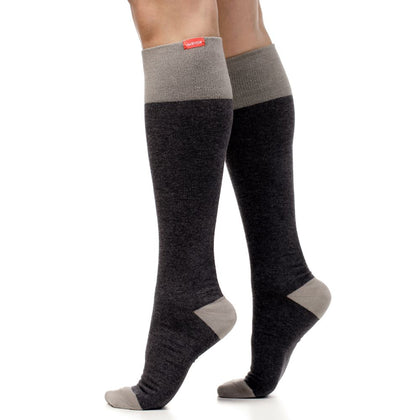
Graduated compression socks apply therapeutic pressure to the lower limbs. They are tighter at the ankle and gradually release pressure as they climb up (typically to just below the knee). This stimulates upwards blood flow (venous return) to shift fluid and prevent it from pooling in the lower legs. Compression socks also help reduce swelling and discomfort, while providing a supportive feeling in the joints as you return to physical activity.
Improving Blood Flow and Circulation
Doctors have found that graduated compression socks improve circulation: they support the lower leg blood vessels and improve blood flow. The graduated design we offer at Vim & Vigr further boosts the upward flow towards the heart. It is a gentle pressure, not meant to cut off your circulation, but rather stimulate the flow of blood and prevent it from settling in the lower legs.
This improved blood flow is essential for your overall wellbeing, as the blood delivers oxygen and nutrients to the organs, tissues, and muscles. This may help you recover better and reduce health risks in the C-section postpartum period.
Helping Reduce Postpartum Swelling
Postpartum swelling is caused by two combined factors: the added volume of blood and fluid (from during pregnancy) and the lack of movement, which reduces blood flow since your muscles aren’t acting like a pump. Through the therapeutic massage applied by compression socks, fluid is moved out of the legs more effectively, leading to feeling less heavy and uncomfortable.
Crucially, the role of compression socks is to keep blood flowing, preventing it from pooling at the lower end of the body. They also help with fluid drainage, since they are known to encourage movement of lymphatic fluids and are even recommended by national health services for this. This eases any swelling caused by fluid buildup and makes you feel better during your postpartum recovery.
Supporting Comfort During Early Recovery
Many people report that compression socks help them feel lighter, more energized, and less achy. One study on pregnant women showed that 13% reported leg heaviness when wearing compression socks, compared to 93% of the group who did not wear them. We know that compression socks may help you have a more comfortable pregnancy by helping manage pain levels and overall circulatory health. During recovery from birth, this comforting support continues to be important as they help to reduce inflammation and swelling.
Additionally, compression socks can be helpful in supporting the joints and circulatory system when your activity levels pick back up after a C-section. Gentle walks alone can be challenging at the start, so wearing a pair of socks that hugs the calf muscles, helps you balance, and supports the arches of the feet can make a huge difference. The continued blood flow boost and improved stability also help avoid injuries.
Lower-Leg Compression vs. Full Medical Stockings
After a C-section, hospitals often issue medical-grade compression stockings to support blood flow while you lie in bed and are less mobile. Some will also use sequential compression devices. These are only used until you can begin to move around comfortably again.
Once you leave hospital and return to your usual habits, using lower-leg compression socks is not just a question of comfort and effectiveness. Stylish, versatile socks like our Vim & Vigr collection allow you to match them to your outfits, so they fit into your life, not the other way around. The graduated compression helps reduce swelling and boost upward blood flow, while the wide choice of colors, designs, and fabrics makes compression socks a great tool for preventing circulatory issues and boosting wellbeing as you recover from your C-section.

How Long to Wear Compression Socks After a C-Section
It is important to wear compression socks as advised by your medical team, starting from right away after surgery, and gradually adjusting as you recover. Again, if you have any questions or potential heart or blood vessel problems, consult your healthcare team.
Compression Use in the Hospital
The Society for Maternal-Fetal Medicine recommends that women recovering from a C-section start using sequential compression devices before surgery and into the period where they can start to move around. This underlines the importance of compression for circulatory health right from the first moments after surgery.
Immediately after a Cesarean delivery, sequential compression devices wrap around your legs and gently inflate. Alternatively, your hospital may provide medical-grade compression stockings. Discuss with your doctor if you have any questions at this stage.
Wearing Compression at Home During Recovery
Once you are more mobile in the hospital or at home, you can wear compression socks during the day if your legs are still swollen, heavy, or aching. You should also wear them if you sit for long periods of time, for example when resting or feeding your baby.
For some people, the need for compression socks goes away in a few weeks. However, general guidelines recommend that women wear some form of compression garments for at least six weeks after giving birth through a C-section.
Signs It May Be Time to Stop or Adjust Wear Time
As you recover, you may be able to first reduce how long you wear compression socks after a C-section, then maybe stop wearing them altogether. This depends on your medical history, recovery status, and activity levels.
You could start reducing wear time if:
-
Your swelling has improved significantly, you are moving around, and the legs feel good during the day.
-
You can walk or exercise regularly.
-
Your doctor suggests you no longer need compression.
You should also look out for negative side-effects. Stop using compression socks if:
-
They feel really tight, digging into the skin or leaving marks.
-
Your feet are going numb or you feel tingling.
-
One leg becomes suddenly more swollen, painful, warm or red than the other.
In these situations, you may be wearing compression socks that are not fitted correctly or may have other health concerns. Seek medical advice right away.
Finally, if you start to experience shortness of breath, chest pain, or sudden nausea, you should see a doctor immediately.
Choosing the Right Compression Socks for Postpartum Comfort
To get the full benefit of compression socks after you’ve given birth, you need to choose the best fitting pair to boost your circulation while also feeling comfortable. Knowing how to navigate fabric options, sizing, and compression levels is key.
Understanding Compression Levels
We’ve explained that the compression stockings you get issued in hospital are most likely “medical-grade” - but what does that mean? Simply put, there are broadly three levels of compression, from the most to least tight:
-
Mild compression is measured as 15-20 mmHg and is the level of “everyday wear”: some therapeutic pressure is applied and you can definitely feel the support in your ankle joints and calf muscles, but you can wear these socks for hours on end, while resting, working, or playing sports.
-
Moderate compression (20-30 mmHg) is more supportive, usually recommended for people with circulatory problems or a documented risk of blood clots or varicose veins, for example.
-
Medical compression (30-40 mmHg) is issued by prescription only and meant for bed-ridden individuals and patients with more serious health concerns.
Your doctor may recommend that you wear medical-level compression socks at the start of your C-section recovery. Good news: we have a wide range of designs at this level, to brighten up your outfits and give you a choice of fabric, from soft cotton to sleek, moisture-wicking nylon.
Then, as you become more active and if your doctor suggests it, you will typically go down to 20-30 mmHg and even 15-20 mmHg. Many people choose to keep wearing 15-20 mmHg to prevent swelling and discomfort when hiking or walking or to soothe aching limbs after a long day on their feet - long after their C-section recovery!
Fabric Choices for Sensitive or Healing Skin
Fabrics are very important when you’re recovering from surgery and may feel sore or sensitive all over. Vim & Vigr compression socks are available in four options:
-
Soft, breathable cotton for everyday wear, great for when you’re still resting and recovering or for going back to work or traveling in.
-
Sleek, flexible nylon for walking or exercising in.
-
Moisture-wick nylon for extra warm or humid days, to keep your feet dry as you move around.
-
Merino wool for antibacterial, hypo-allergenic softness that is also temperature regulating: your feet will stay warm when it’s cold out, and cool in the heat. It’s the perfect choice for a cocooning, enveloping treat for your legs.
Fit Considerations, Including Wide Calf and Open-Toe Options
Recovering postpartum isn’t straightforward, and your changing body needs to be accommodated beyond simple hosiery designs. This is why, at Vim & Vigr, we cater to a number of different possible requirements to ensure you stay comfortable and get the benefit of compression:
-
Wide calf socks avoid the discomfort of wrangling regular-sized pairs onto your feet and lower legs. You’ll get the right fit for you but adjusted to expanded calves after giving birth. Measure the circumference of your calf to see what size suits you best.
-
Open toe designs are there for when you want to wear sandals or simply let your toes breathe. You’ll still feel a tight, supportive grip on the foot and ankle, and the same reassuring support through the lower leg.
-
Seamless socks are also available for a smoother experience, reducing the risk of chafing and blisters.
Remember: Compression socks should always feel like they apply some pressure, but without becoming uncomfortable or restrictive. If your socks are making you sore, they could be too small for you. Refer to our sizing chart and tips to find the best fitting pair for you.
Extending Comfort Beyond the Hospital: Everyday Compression Socks
It’s important to use compression garments and devices when you’re recovering from a Cesarean delivery at the hospital. Once you return home, you are hopefully going to be more mobile, which allows you to combine gentle exercise with softer, milder compression to improve circulation and reduce swelling. You’ll also be looking for garments that fit your lifestyle more.
Look for the fabrics and designs that make you want to wear your socks
Compression socks are more beneficial when worn regularly. If you have stylish, comfortable socks to choose from, you’re more likely to add them to your everyday wardrobe. Additionally, matching the fabric to your activity levels or environmental conditions will pay dividends when it comes to comfort.
Here are our recommendations:
For soft, everyday support: Cotton Pickle Paddle 15-20 mmHg Socks
Excellent for adding a pop of color to a casual outfit, these come in 15-20 mmHg as well as 20-30 mmHg if you need more support.
For sensitive skin: Merino Wool Thick Stripe
A classic design for the office or school, these stripey socks made from merino wool are soft to the touch, but also hypoallergenic and antibacterial. Great to wear if your skin feels irritated or sensitive, but you still want some compression support.
For full-leg coverage: Solid Compression Tights
If you feel too cold for knee-high compression socks or want to feel some support in the thighs and abdominal area, the full-length tights are a perfect choice. They’re made from sleek nylon that moves seamlessly with your body, and available in milder or firmer compression levels to suit your recovery journey.
For a classic look with open toes: Heathered Collection 20-30 mmHg
Let your toes breathe while benefiting from moderate compression from the ankle upwards. These socks are ideal if you’re coming out of hospital in the summer, letting you wear flip flops and sandals while sporting a stylish design and boosting your peripheral circulation.
Common Questions About Compression Socks After a C-Section
Can I wear compression socks all day?
Yes, most people can wear their compression socks the whole day long, but you may need to build up to this if you haven’t worn them before. Start with a few hours at a time, when you’re sitting, resting, or feeding your baby. Then, if the socks feel comfortable, you can add more wear time gradually as needed.
Should I wear compression socks at night?
Typically, you should remove your compression socks when you go to sleep, especially if you’ve worn them all day long. But, if you have a particular health concern, consult with your doctor to see what they recommend.
What if compression socks feel uncomfortable or too tight?
Compression socks should feel tight but supportive, rather than too snug. If they dig into your skin, leave marks, or cause numbness, you should remove them right away. You may be wearing the wrong size or compression level for you. Please refer to our sizing chart for a better fit and consult with a medical professional if you have any doubts or concerns.
Conclusion: Supporting Your Recovery, One Comfortable Step at a Time
Graduated compression socks support the lower-leg circulatory system, boosting blood flow throughout the body and keeping you energized and healthy. When recovering from a C-section, considerations around continued blood flow and reducing swelling and discomfort become essential. By wearing well-fitted, high-quality compression socks, you’ll be able to integrate a preventative and soothing tool in your everyday life without it ever looking like a medical device.
The right choice for C-section recovery will always, however, depend on comfort, the stage of your recovery, and your medical history. You should always discuss compression wear with your doctor and take their advice in the first instance.
And, as you go back to your everyday life while bringing up your newborn baby, using compression socks can be a simple, supportive, and stylish way to improve your comfort levels while managing any unwelcome symptoms.

References
Charles, T., Mackintosh, D., Healy, B., Perrin, K., Weatherall, M., & Beasley, R. (2011). Merino wool graduated compression stocking increases lower limb venous blood flow: a randomized controlled trial. Advances in Therapy, 28(3), 227–237. Read it here.
Devis P, Knuttinen MG. Deep venous thrombosis in pregnancy: incidence, pathogenesis and endovascular management. Cardiovascular Diagnosis and Therapy. 2017 Dec; 7 (Suppl 3): S309-S319. Read it here.
Federspiel, J. J., Rodger, M. A., Hoffman, M. R., Skeith, L., Ortel, T. L., Bruno, A. M., & James, A. H. (2026). Postoperative venous thromboembolism following cesarean delivery: prevalence, pathophysiology, diagnosis, treatment, and prevention. American Journal of Obstetrics and Gynecology, 233(6S), S404–S424. Read it here.
Lim, C. S., & Davies, A. H. (2014). Graduated compression stockings. CMAJ: Canadian Medical Association Journal = Journal de l'Association Medicale Canadienne, 186(10), E391–E398. Read it here.
Mosti, G., Picerni, P., & Partsch, H. (2012). Compression stockings with moderate pressure are able to reduce chronic leg oedema. Phlebology, 27(6), 289–296. Read it here.
Shelat, T., Patel, K. H., Ganne, N., Polk, A., Zell, E., & Stacey, S. K. (2026). Edema in Pregnancy: A Common yet Understudied Maternal Concern. Cureus, 18(2), e103915. Read it here.
Society for Maternal-Fetal Medicine, Pacheco, L., Saade, G., & Metz, T.D. (2020). Society for Maternal-Fetal Medicine Consult Series #51: Thromboembolism prophylaxis for cesarean delivery. SMFM Consult Series, Vol 223(1): PB11-B17. Read it here.
Soma-Pillay, P., Nelson-Piercy, C., Tolppanen, H., & Mebazaa, A. (2016). Physiological changes in pregnancy. Cardiovascular Journal of Africa, 27(2), 89–94. Read it here.
Sugisawa, R., Unno, N., Saito, T., Yamamoto, N., Inuzuka, K., Tanaka, H., Sano, M., Katahashi, K., Uranaka, H., Marumo, T., & Konno, H. (2016). Effects of Compression Stockings on Elevation of Leg Lymph Pumping Pressure and Improvement of Quality of Life in Healthy Female Volunteers: A Randomized Controlled Trial. Lymphatic Research and Biology, 14(2), 95–103. Read it here.